
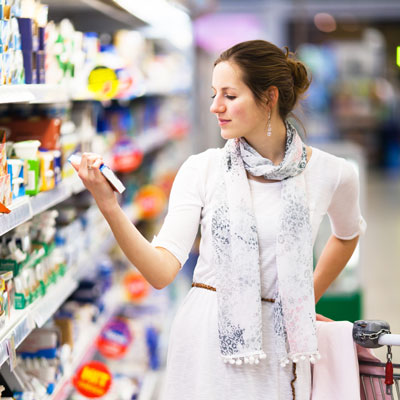
 Elma Rivera, product developer and co-owner of Meadowsweet, offers her tips on how consumers can ensure they avoid the ‘nasties’ and purchase only the healthiest products.
Take your time
It’s important, when shopping, to take your time. You need to have the time to carefully consider each product you plan on buying – from the ingredients to the way it is made to its benefits. Careful investigation is required to determine whether a product is good for you as a whole.
Try to avoid parabens
Look out for products with an ingredient that ends in ‘-paraben’, including methylparaben, ethylparaben and propylparaben. Paraben is a chemical preservative that some research has suggested is linked to breast cancer. That said, there isn’t any conclusive evidence, but it’s always good to take stock of what you’re applying to your skin.
Scrutinise your soap
Most soaps and shampoos contain sodium laureth sulphate (SLS). Experts are concerned that due to the miniscule size of SLS molecules, the chemical can easily be absorbed by the skin. While trace amounts of SLS is harmless, it has been noted as a carcinogenic. It’s therefore best to use shampoos, body washes and soaps with ammonium lauryl sulphate (ALS) – this substance’s molecules are so large that it’s very difficult for the skin to absorb them, rendering them harmless especially in a wash and rinse situation.
‘Natural’ may not mean ‘nice’
Some natural ingredients are as beneficial to your health as they make themselves out to be. Some brands claim organic as a product benefit when only a small percentage of the actual product is organic. When buying organic products, always look for certification by credible international bodies such as ECOCERT, LEAF or the Dutch/German-based Control Union.
Investigate your ingredients
The ingredients on cosmetics products are listed in order of volume – you’ll usually see aqua (water) as the first ingredient listed, because most products are water-based. The three ingredients you’re most likely to see listed just after water are glyceryl stearate, cetyl alcohol, and stearic acid. While all three are safe to use in volumes of less than 3%, it’s best to avoid products where they are listed at the top of the ingredients.
Image: lightpoet/Shutterstock.com


31 comments
Williamson
very helpful – now can you ask them to print the info a bit bigger
Lady-T
OMG!! So much I didn’t know? Thank you
Alberts
In my opinion the best option to choose is natural or organic products. Don’t settle for lower percentages of the bad stuff. There are plenty of products and brands available that don’t compromise on quality or effectiveness, and are free from dangerous chemicals.
The best thing to do is to verse yourself on the most common baddies and a general rule of thumb is: if you cant pronounce it or know what it is, it’s probably not natural.
If you like to find out a bit more, here’s another good article on the subject http://greenlove-organics.co.za/healthy-living/know-what-is-in-your-skincare-products/
Rochelle Stewart
I always read labels, and I take especially note of the expiry date!
Debsie
Love the article. Very helpful. My son got eczema and I had to double check his bath products since birth.
CarolynMcM
I’ve recently started reading labels, trying to understand what are all the nasty goodies one should avoid. Products I thought were good, actually contain the bad stuff. Even started to look what is in baby products as I don’t want to be rubbing bad nasties into my little girls skin.
Charne
Okay…OMW! This is a great article!
Chicara
I always check the ingredients. But even some ‘natural’ ingredients have caused a bad reaction on my skin.
ricebunny
Good to know but unfortunately the leading brands makeup all contain parebens
Botes
Definitely be looking at the back of my products from now on, I think I take for grated the fact that I just trust certain brands…….thanks for this informative piece.